
Discover opamp and its applications in electronics
The operational amplifier, or opamp, is a fundamental component in the field of analog electronics. This revolutionary integrated circuit transforms the way we process electrical signals. It is capable of amplifying, filtering and manipulating signals with unparalleled precision. The opamp is essential in our daily lives and in industry.
Les opamps sont omniprésents, allant des systèmes audio aux instruments de mesure. Leur polyvalence les rend idéaux pour servir de comparateurs de tension, de redresseurs actifs, ou de filtres de signaux. Des entreprises comme Eukleed les utilisent dans leurs solutions électroniques industrielles, profitant de leurs caractéristiques uniques.
An ideal opamp has remarkable properties: infinite open-loop voltage gain, infinite input impedance and zero output impedance. These characteristics enable engineers to create high-performance, precise circuits. They are capable of amplifying tiny signals or acting as perfect voltage followers.
Key points to remember
- The opamp is a central component in analog electronics
- It amplifies, filters and manipulates electrical signals.
- Applications include audio, measurement and industry
- The ideal opamp has infinite gain and infinite input impedance.
- Eukleed utilise les opamps dans ses solutions industrielles
Introduction to the operational amplifier
The operational amplifier, or opamp, is an essential component in today's analog electronics. It plays a fundamental role in many electronic systems. Its versatility makes it an essential component.
Definition and fundamental role
An operational amplifier is an integrated circuit designed to amplify the potential difference between its two inputs. It features high gain, high input impedance and low output impedance. These characteristics make them ideal for a wide range of applications in analog electronics.
History and development
The invention of the operational amplifier is attributed to John R. Ragazzini in 1947. Initially, they were used in analog calculators. The first widely available model, GAP/R's K2-W, appeared in 1953. Today, opamps are miniature integrated circuits. Discrete component versions still exist for specific applications.
Importance in modern electronics
Operational amplifiers are crucial in modern electronics. Their versatility enables them to perform mathematical operations such as addition, subtraction, integration and derivation. They are used in many applications, such as motor control, voltage regulation and oscillators. The μA741, a classic model, is still widely used in various electronic assemblies.
Chez Eukleed, nous exploitons les capacités des amplificateurs opérationnels pour créer des solutions électroniques industrielles de pointe. Nous les adaptons aux besoins spécifiques de nos clients.
Opamp structure and components
The operational amplifier, or opamp, plays a crucial role in analog electronics. It is made up of several key components, which give the opamp its exceptional capabilities.
Differential inputs
The heart of the opamp lies in its two inputs: the inverting (-) input and the non-inverting (+) input. These inputs handle signals with a high impedance, varying between 10 MΩ and 100 MΩ. This property enables it to efficiently amplify AC and DC signals without distorting them.
The output stage
The opamp output has a low impedance, typically a few ohms. It is capable of delivering a current of a few milliamps. Open-loop gain can reach impressive levels, such as 160,000 for the LM741 model.
Power supply and pinout
A typical opamp has at least 5 pins: two for inputs, one for output and two for power supply. It operates with either a single-ended or balanced supply, with some models accepting up to ±18V. Power consumption varies from a few microamps to a few milliamps, with power-saving options available on some models.
Ces caractéristiques rendent l'opamp essentiel dans de multiples applications. Il est utilisé dans des solutions d'affichage et de gestion d'énergie par Eukleed. Sa structure lui permet d'adapter à diverses configurations, du simple suiveur au filtre actif complexe.
The fundamental characteristics of an operational amplifier
Operational amplifiers, or opamps, have unique properties that are essential in electronics. Its high gain, its ability to manage offset and its saturation range make it versatile. These characteristics make it an essential component.
An ideal opamp has infinite gain, infinite input impedance and zero output impedance. In reality, these values vary. The LM741, for example, offers a differential gain of 200 V/mV, an input impedance of 2 MΩ and an output impedance of 75 Ω.
Linearity is essential to ensure proportional response over a wide voltage range. Offset, typically 15 mV for the LM741, can influence this linearity. The slew rate, limited to 0.5 V/µs for this model, determines the circuit's response speed.
In an inverter circuit, gain is calculated by G = -R2/R1. For example, with R2 = 25 kΩ and R1 = 5 kΩ, we obtain a gain of -5. This configuration allows us to fine-tune the amplification of the input signal.
Eukleed utilise ces caractéristiques pour développer des solutions électroniques avancées. Ils prennent en compte les compromis entre gain, offset, saturation et linéarité pour chaque application spécifique.
Operational amplifier operating modes
The operational amplifier, or opamp, plays a crucial role in analog electronics. It is distinguished by its versatility, resulting from its multiple modes of operation. These modes are essential in a variety of applications.
Linear mode
In linear mode, the opamp acts as a proportional amplifier. The output voltage oscillates between +Vsat and -Vsat, depending on the input. Negative feedback ensures amplification linearity. This mode of operation is particularly suitable for precise amplification and active filtering.
Comparator mode
In comparator mode, the opamp behaves like a switch. It evaluates the voltages on its inputs and changes state. This function is crucial for threshold detection and analog-to-digital conversion.
Saturated mode
The saturated mode is reached when the output reaches its limits. It is used in oscillators and square-wave generators. Saturation may be intentional or due to an excessive input signal.
Thanks to these modes, opamps can be adapted to a variety of applications. They range from precise amplification to binary decision-making. They are indispensable for analog electronics engineers.
Practical applications of operational amplifiers
The opamp, a fundamental component in analog electronics, plays a crucial role in many fields. It radically transforms the way we manipulate electrical signals. Its usefulness is indisputable in modern technology.
Signal amplification
Opamps are distinguished by their ability to amplify weak signals. In non-inverting mode, they amplify the signal while retaining its original phase. This feature makes them particularly suitable for audio systems and measuring devices.
Active filtering
Active filtering is a major application for opamps. They enable the creation of highly precise filters, capable of effectively eliminating noise. This function is essential in audio processing and industrial control systems.
Analog-to-digital conversion
Opamps are indispensable in analog-to-digital conversion. They adjust voltage levels and prepare signals for digital conversion. This function is vital in modern appliances, from smartphones to medical devices.
Les solutions d'Eukleed en matière de connectivité et de systèmes embarqués démontrent l'efficacité des opamps. Leurs produits emploient des opamps pour amplifier les signaux de capteurs, filtrer les interférences et garantir une conversion analogique précise.
Basic fixtures with opamp
The operational amplifier plays a crucial role in analog electronics. It is indispensable for creating integrated circuits. Among these configurations are some of the most fundamental:
- Voltage-follower amplifier: Vs = Ve
- Non-inverting amplifier: Vs = Ve * (1 + R2/R1)
- Inverting amplifier: Vs = Ve * -R2/R1
- Differential amplifier: Vs = (Vp - Vn) * (R2/R1)
- Inverter summing: Vs = -(V1 + V2) if R1 = R2 = R3
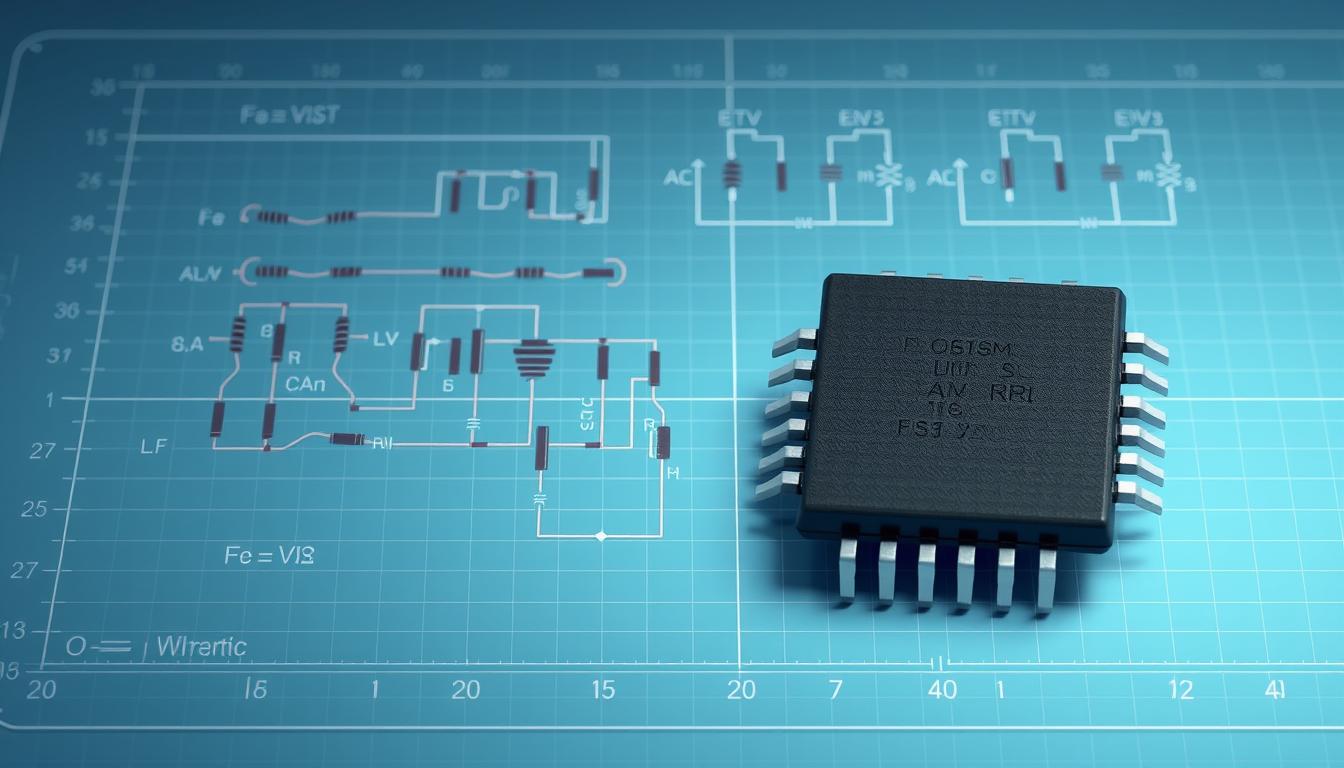
Each of these assemblies offers unique capabilities. The voltage follower ensures perfect isolation, ideal for subsequent stages. The non-inverting amplifier amplifies the signal without modifying its phase. The inverter, on the other hand, inverts and amplifies or attenuates the signal, depending on the resistors.
Eukleed intègre ces configurations dans ses solutions personnalisées. Par exemple, l'amplificateur différentiel est essentiel pour éliminer le bruit commun. Le sommateur inverseur permet l'addition de plusieurs signaux. Ces éléments de base sont cruciaux pour concevoir des circuits analogiques performants, répondant aux exigences spécifiques de chaque secteur industriel.
Design considerations and practical limitations
Designing circuits with opamps in analog electronics requires mastery of the limits of these components. Engineers need to consider several aspects to improve performance. This includes understanding the specific characteristics of opamps.
Input and output impedance
The input impedance of an ideal opamp is theoretically infinite, but in practice it is limited. A high impedance reduces the impact on the input signal. The ideal output impedance, on the other hand, is zero, which influences the opamp's ability to drive a load.
Bandwidth and slew rate
The bandwidth determines the usable frequency range. An opamp with a bandwidth of 10 MHz is suitable for many applications. The slew rate, measured in V/µs, indicates how quickly the amplifier responds. A slew rate of 13 V/µs is typical for standard opamps.
Noise and offset
Electronic noise impacts measurement accuracy. An opamp with an input noise voltage of 4 nV is considered high-performance. Offset, an output offset voltage, can be adjusted but never completely eliminated.
Designers need to navigate these parameters to design efficient circuits. The use of simulations, such as SPICE, enables opamp behavior to be predicted. Technical support from specialist manufacturers is essential to optimize the use of opamps in specific projects.
Industrial solutions and component selection
Choosing the right operational amplifier is essential to the success of any analog electronics project. Opamps, these versatile integrated circuits, play a central role in many industrial applications.
Criteria for choosing an operational amplifier
The selection of an opamp is based on several essential criteria:
- Supply voltage range
- Bandwidth
- Precision
- Energy consumption
- Operating temperature
The LM258, a popular dual opamp, operates between 3V and 32V. It offers 1MHz bandwidth and 500µA power consumption. Its ability to operate between -25°C and 85°C makes it suitable for a variety of industrial applications.
Main ranges and manufacturers
Industry leaders offer a variety of opamps for every need. Analog Devices, Texas Instruments and STMicroelectronics dominate the market. Their ranges combine high-precision models for instrumentation with low-power versions for portable electronics.
The choice between inverted and non-inverted configurations varies according to the application. Inverted opamps stand out for their efficiency in active filtering and audio processing. Non-inverted opamps, on the other hand, are ideal for precision amplification and medical applications.
Future prospects and new technologies
The future of operational amplifiers looks very bright. The market for automotive-grade opamps is expected to reach 5 billion USD by 2032. This annual growth of 8.65% is driven by increased demand for advanced driver assistance systems and autonomous vehicles.
Advances in analog electronics are aimed at greater miniaturization and extended functionality. Modern integrated circuits now incorporate artificial intelligence. This opens up new application possibilities.
Opamps are essential for energy management in electric and hybrid vehicles. They are indispensable for battery management and power converters. This trend is set to intensify as green technologies take off.
The Internet of Things and biomedical applications are opening up new horizons for operational amplifiers. Their precision and low power consumption make them ideal for wearable devices and cutting-edge medical instruments.
Analog, digital and mixed-signal amplifiers are enjoying strong growth. Their main use is signal conditioning and voltage/current amplification. These functions are crucial in many areas of modern electronics.
Conclusion
The operational amplifier, or opamp, remains a fundamental component in the field of analog electronics. It offers great flexibility, capable of performing a variety of operations. These range from addition and integration to subtraction and differentiation. Negative feedback is essential to ensure linear operation and reduce input voltage variations.
Opamps play a key role in a wide range of applications, from active filters to comparators. Their ability to adapt to different contexts makes them indispensable, even in digital signal processing. To enhance their efficiency, circuits often incorporate additional components. These elements, such as resistors and capacitors, compensate for certain limitations.
Choosing the right opamp is crucial, and depends on the specific needs of each project. Simulation tools, such as Proteus, are essential for designing and testing opamp circuits. They offer valuable static and dynamic analyses. Ultimately, the opamp is a mainstay of electronics design, combining versatility and cost-effectiveness.
FAQ
What is an operational amplifier (opamp)?
An operational amplifier, or opamp, is an essential electronic component. It amplifies, filters and manipulates electrical signals with great precision. It is a versatile integrated circuit widely used in modern electronics for a variety of applications.
How does an operational amplifier work?
An opamp works by amplifying the difference between its two inputs. It produces an output proportional to this difference. It can operate in linear mode for amplification, in comparator mode for decision making, or in saturated mode, depending on the application.
What are the main features of an opamp?
The key characteristics of an opamp include gain, offset, saturation, linearity, bandwidth and slew rate. These parameters determine the amplifier's performance and accuracy in different applications.
What are the most common applications for operational amplifiers?
Opamps are used in a wide range of applications. They are essential for weak signal amplification, active filtering to eliminate noise, analog-to-digital conversion, audio systems, measuring instruments and industrial control systems.
What is feedback in an opamp circuit?
Feedback is a technique whereby part of the output is fed back to the opamp input. It is used to stabilize gain, reduce distortion and improve overall circuit performance. It is a fundamental concept in opamp circuit design.
How do you choose the right operational amplifier for a specific application?
The choice of an opamp depends on a number of factors. Required accuracy, operating speed, power consumption, reliability and environmental conditions are all essential. It is important to consider the technical specifications and compare them with the application requirements.
What are the practical limitations of operational amplifiers?
The main limitations include limited bandwidth, slew rate, electronic noise, voltage offset and temperature effects. These factors can affect opamp performance, particularly in high-frequency or high-precision applications.
Comment les entreprises comme Eukleed utilisent-elles les opamps dans leurs solutions ?
Eukleed intègre les opamps dans ses solutions électroniques industrielles. Ils sont utilisés pour l'affichage, la gestion d'énergie, la connectivité et les systèmes embarqués. Ils créent des solutions sur mesure répondant aux besoins spécifiques de leurs clients industriels.
What are the future trends in operational amplifiers?
Future trends include improved speed and precision, increased energy efficiency, and greater integration into complex systems. Opamps will play an important role in emerging technologies such as the Internet of Things and artificial intelligence.