
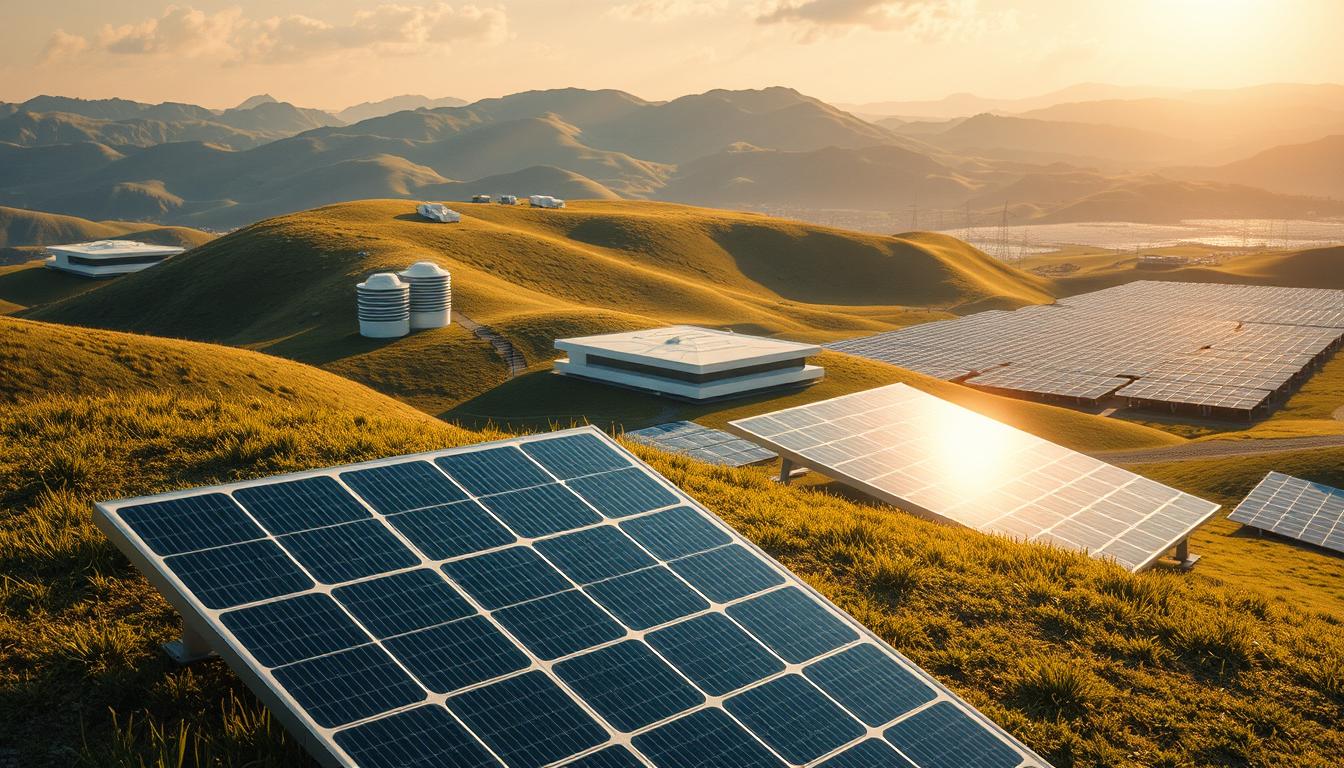
Energy recovery: solutions for tomorrow
The energy transition represents a crucial challenge for our society. In the face of the climate emergency, energy recovery offers an innovative alternative. This technology, which captures environmental energy, promises to transform the way we produce and consume energy.
Eukleed, expert en intégration de solutions électroniques industrielles, occupe une position centrale dans ce domaine. L'entreprise favorise l'adoption de ces technologies dans l'industrie, préparant ainsi un avenir énergétique plus respectueux de l'environnement.
The statistics speak for themselves: the global market for energy recovery systems is expected to reach $820 million by 2026, with annual growth of 12.75%. This expansion is driven by the increase in connected objects, which are expected to double in number by 2025, reaching over 27 billion IoT connections.
Companies like ATIM Radiocommunication are pioneers in this field. Their e-Green sensor, based on LoRaWAN technology, demonstrates the potential of energy recovery to create autonomous, reliable devices.
Key points to remember
- Energy recovery collects ambient energy from the environment
- The global market will reach $820 million in 2026
- 27 billion connected objects by 2025
- Sources include solar, vibratory and electromagnetic energy.
- Innovations such as ATIM's e-Green sensor demonstrate the potential of this technology
Understanding the energy transition and its challenges
The energy transition is a major global challenge. It aims to replace fossil fuels with renewable sources. This transformation is crucial to combating climate change and ensuring a sustainable future.
Current climate challenges
Global warming is threatening our environment. Greenhouse gas emissions must fall by 45% by 2030 compared with 2010. To achieve this, we need to develop efficient energy collectors and innovative autonomous systems.
The importance of decarbonization
Decarbonization is essential if we are to achieve our climate objectives. The IEA predicts that fossil fuels will have to supply less than 20% of energy by 2050. Investment in clean energy is expected to reach $4 trillion per year by 2030.
European targets for 2050
Europe is aiming for carbon neutrality by 2050. To achieve this, it is counting on :
- The development of renewable energies
- Improving energy efficiency
- Deploying autonomous systems and energy sensors
L'Union Européenne prévoit une capacité de stockage d'énergie de 300 GWh d'ici 2030. Les solutions comme celles d'Eukleed, intégrant des technologies LoRa et GNSS, jouent un rôle clé dans cette transition.
Energy harvesting: principles and applications
Energy harvesting opens up new horizons for powering electronic devices. This innovative technique harnesses ambient energy in various forms to generate usable electricity. It represents a significant advance in energy management.
Ambient energy sources
Nature is full of usable energy sources:
- Heat
- Vibrations
- Light
- Electromagnetic waves
These energies, often neglected, can be captured and transformed into electricity using advanced technologies. Micro-generators and piezoelectricity play a key role in this transformation.
Energy recovery technologies
Micro-generators convert mechanical movements into electrical energy. Piezoelectricity exploits the deformation of certain materials to produce a current. These innovations enable the creation of energy-independent systems.
Industrial applications
Energy harvesting has many industrial applications. Battery-free sensors monitor wastewater treatment plants. In the automotive industry, integrated sensors powered by ambient energy monitor various parameters. Ultra-low-power sensor networks pave the way for autonomous wireless applications.
Eukleed propose des solutions de gestion d'énergie pour optimiser l'utilisation de l'énergie récupérée. Ces technologies promettent un avenir où les appareils électroniques fonctionneront de manière autonome. Sans avoir besoin de batteries traditionnelles, elles ouvrent la voie à une autonomie énergétique accrue.
Hydropower: the leader in renewable energies
Hydropower stands out as a leading source of renewable energy in France. With over 1,730 installations in 2014, the country leads the European rankings for small hydroelectric power plants. This technology represents a stable, complementary solution to intermittent energies such as solar power and thermoelectricity.
The city of Saint-Etienne illustrates the potential of urban hydropower. Its 350 kW plant reduces CO2 emissions by 140 tonnes a year. The Rondeau project, costing 8.7 million euros, supplies 5,700 people with electricity. Its turbines, spinning at just 50 rpm, minimize environmental impact.
There are several advantages to developing hydropower in urban areas:
- Lower grid connection costs
- Use of existing infrastructures
- Potential for an additional 1,000 MW in France
- Support for intermittent energies such as solar power
Eukleed, avec ses 30 ans d'expérience, contribue à l'intégration de solutions hydroélectriques innovantes. L'entreprise combine cette technologie avec la thermoélectricité et l'energie solaire pour créer des systèmes énergétiques hybrides performants. Cela ouvre la voie à un avenir énergétique plus durable.
Innovations in solar energy
Solar energy is living through an era of technological transformation. In 2023, France produced a record 21.5 TWh of photovoltaic solar energy. Advances in photovoltaic systems, innovative storage solutions and building applications are revolutionizing our energy management.
New photovoltaic systems
Perovskite solar cells represent a significant advance. They require 10 to 1000 times less material than silicon cells. Solar panels made from food waste offer an environmentally-friendly solution, using luminous particles from discarded fruit and vegetables.
Innovative storage solutions
Supercapacitors are now an integral part of solar systems. They reduce dependence on batteries, improve durability and reduce electronic waste. This technology is particularly effective for storing the energy recovered by solar transducers.
Building applications
Intelligent buildings incorporate sophisticated energy management systems. These systems optimize the conversion and use of captured solar energy. 3D-printed solar trees, capable of capturing solar, kinetic and thermal energy, are revolutionizing urban architecture.
Eukleed propose des solutions d'affichage et des systèmes embarqués qui s'intègrent parfaitement dans ces innovations solaires. Leurs écrans TFT, OLED et e-paper, ainsi que leurs PC industriels, améliorent le contrôle et la surveillance des systèmes solaires, rendant la gestion de l'énergie plus efficace que jamais.
The wind power revolution
Wind power is growing by leaps and bounds. By 2023, it will account for 7.8% of global electricity production. China dominates new installations with a 66% market share, followed by the USA and Germany. Denmark stands out with 57.7% of its electricity coming from wind power.
Global wind power capacity reached 1 terawatt in June 2023, marking 40 years of steady progress. In France, wind power generated 50.7 TWh in 2023, or 10.2% of the country's electricity. These figures testify to the potential of wind energy recovery.
Innovations are revolutionizing the sector. A new 5 kW bladeless wind turbine generates an average of 14.3 MWh per year. With its compact 3-meter design, it operates silently. Installed in series on roofs, it can generate 50% more energy than an equivalent photovoltaic system.
Les capteurs énergétiques jouent un rôle crucial dans l'optimisation des éoliennes. Ils permettent un suivi précis des performances et facilitent la maintenance prédictive. Eukleed propose des solutions sur mesure d'affichage et de batteries adaptées aux parcs éoliens, contribuant à l'essor de cette énergie propre.
The promise of osmotic energy
Osmotic energy opens up new perspectives in the field of renewable energies. This innovative technology exploits the difference in salinity between fresh and salt water to produce clean, sustainable electricity.
Operating principle
The process relies on the osmotic pressure created when two solutions of different salinity are separated by a semi-permeable membrane. Fresh water flows naturally through the membrane towards the salt water, generating pressure. This pressure can be converted into electricity via a turbine.
Existing installations
Several osmotic energy pilot projects have been launched around the world. In Norway, an experimental power plant is using autonomous systems to optimize production. In the Netherlands, osmotic micro-generators are being tested in a river estuary.
Development potential
Osmotic energy has great growth potential. Technological advances in membranes and autonomous systems offer the prospect of increased yields. The integration of micro-generators could make it possible to exploit smaller sources of brackish water.
To ensure the smooth running of these complex installations, high-performance connectivity solutions are crucial. They enable real-time monitoring and optimized management of osmotic energy production.
Bioluminescence: lighting for the future
Nature provides inspiration for future lighting through bioluminescence. This phenomenon in certain living organisms could transform our lighting systems. They would become more ecological and consume less energy.
Bioluminescence results from a chemical reaction. Luciferin, oxidized by luciferase, produces light. This bio-inspired technology opens the way to innovative applications. Examples include ultra-sensitive biosensors and non-invasive biomedical imaging techniques.
Researchers are working on triplet-singlet energy systems (TS-FRET). Their aim is to create materials with organic remanence. These advances enable long-lasting light emissions. Lifetimes reach up to 2.46 seconds, with high quantum efficiencies of 23.4%.
The integration of piezoelectricity and thermoelectricity could optimize these systems. Piezoelectricity would convert mechanical vibrations into electricity. Thermoelectricity would transform temperature differences into usable energy.
Malgré son potentiel, la bioluminescence rencontre des défis. Son efficacité est inférieure aux sources lumineuses artificielles. La production à grande échelle de matériaux bioluminescents reste complexe. Les solutions de gestion d'énergie, comme celles d'Eukleed, sont cruciales pour optimiser ces systèmes innovants.
Low-carbon hydrogen and fuel cells
Low-carbon hydrogen is positioning itself as a key energy vector for the decarbonization of sectors resistant to electrification. The production of green hydrogen, mainly from solar energy, opens up unprecedented prospects for the energy transition.
Green hydrogen production
Innovative initiatives are being developed for sustainable hydrogen production. The CALEX4H2 project focuses on the emergence of electrolyzers based on nickel, phosphorus and sulfur. This innovation aims to reduce costs and environmental footprint. The CoMet project is exploring graphitic carbon nitride photocatalysts for solar hydrogen.
Transportation applications
The transport sector is benefiting from advances in hydrogen technology. In Germany, the National Hydrogen Innovation Program (NIP) is funding the development of recharging stations in Berlin and Hamburg. This program, with a budget of 1.4 billion euros over 10 years, supports 170 projects involving the automotive, energy and research sectors.
Technological challenges
Des défis subsistent malgré les avancées. L'amélioration des transducteurs et des systèmes de récupération d'énergie est essentielle pour l'efficacité des piles à combustible. Eukleed, par exemple, offre des solutions personnalisées, telles que l'affichage et les batteries, pour répondre aux exigences de cette filière en croissance.
Biomass and biogas: resources for the future
Biomass and biogas are positioning themselves as key alternatives for the future of energy recovery. These innovative technologies promise to transform energy management. They aim to reduce our dependence on fossil fuels, which have been essential until now.
Biomass is based on the use of organic matter to generate energy. Second-generation biofuels, made from agricultural and forestry residues, offer major ecological advantages. They reduce greenhouse gas emissions by 83-90% compared with conventional diesel.
Biogas, produced by the methanization of organic waste, has promising potential. However, the process is not without its challenges. The increase in methanization-related incidents, from 6 to 38 per year per 1,000 digesters since 2015, highlights the importance of meticulous management.
Microalgae, considered third-generation biofuels, promise yields up to 50 times higher than traditional oil crops. This innovation opens up unprecedented prospects for energy recovery.
The use of residues and wastes in biofuel production is in line with the logic of sustainable energy recovery. This approach reduces environmental impact and improves resource efficiency. It contributes to more responsible energy management.
Intelligent energy management solutions
Intelligent energy management is transforming the way we consume energy. It uses advanced technologies such as ambient energy and energy sensors. These innovations enable more efficient and sustainable use of resources.
Automated control systems
Automated control systems are essential for optimizing energy use. Companies such as e-peas and EnOcean are creating energy harvesting technologies. These technologies power autonomous IoT sensors, which collect data in real time. This enables precise energy management in buildings and industrial facilities.
Optimizing consumption
Optimizing consumption relies on innovative solutions. For example, TCT has developed an autonomous current sensor. It uses energy recovery technology and is compatible with LoRa and BLE. These technologies reduce dependence on batteries, thus cutting maintenance costs and environmental impact.
Smart grids
Les réseaux intelligents changent la façon dont l'énergie est distribuée. Ils utilisent des capteurs énergétiques et l'énergie ambiante pour équilibrer production et consommation en temps réel. Eukleed offre des solutions de connectivité et des systèmes embarqués qui s'intègrent parfaitement dans ces réseaux. Cela ouvre la voie à une gestion énergétique plus efficace et durable.
FAQ
What is energy recovery and why is it important?
Energy harvesting involves transforming environmental energy into electricity. This technology is essential to the energy transition. It enables us to create autonomous and efficient systems, reducing our dependence on traditional energies and our carbon footprint.
What are Europe's energy transition targets for 2050?
Europe is aiming for carbon neutrality by 2050. This implies a drastic reduction in greenhouse gas emissions. We also need to increase the share of renewable energies in our energy mix and improve energy efficiency in all sectors.
What are the main sources of exploitable ambient energy?
The main sources of ambient energy include heat, vibrations, light and electromagnetic waves. These energies can be converted into electricity using a variety of technologies. These include thermoelectricity, piezoelectricity, photovoltaic cells and RF energy recovery antennas.
How does hydropower contribute to the production of renewable energy in France?
In France, hydropower is the leading renewable energy source. It is crucial to the production of clean electricity and reduces CO2 emissions. Hydropower plants also offer great flexibility in balancing the electricity grid, particularly with solar and wind power.
What are the latest innovations in solar energy?
Recent innovations in solar energy include more efficient photovoltaic systems. There are also advanced storage solutions such as flow batteries and super-capacitors. These advances, together with intelligent energy management systems, optimize the production and use of solar energy.
What is the potential of osmotic energy?
Osmotic energy, based on the difference in salinity between fresh and sea water, is promising. Although still under development, it could provide a constant source of energy. Its potential is particularly interesting in coastal regions where both fresh and salt water are abundant.
How could bioluminescence be used as a lighting source?
Bioluminescence, a natural phenomenon in certain organisms, is being studied for lighting applications. The aim is to develop lighting systems based on this biological principle. These systems could be combined with energy recovery technologies to make them autonomous and environmentally friendly.
What role does low-carbon hydrogen play in the energy transition?
Low-carbon hydrogen, especially green hydrogen, is crucial to the energy transition. It offers a long-term energy storage solution. Fuel cells using this hydrogen hold great promise for decarbonizing various sectors.
How do biomass and biogas contribute to the production of renewable energy?
Biomass and biogas are important sources of renewable energy. They enable organic waste to be recycled. Biomass can be converted into heat, electricity or biofuels. Biogas, derived from fermentation, can produce electricity and heat. These technologies reduce greenhouse gas emissions and manage waste sustainably.
What is an intelligent energy management system?
An intelligent energy management system optimizes energy production, distribution and consumption. It includes automated control systems and consumption optimization methods. These systems often incorporate ambient energy recovery technologies and energy sensors to maximize energy efficiency.