
Industrial IoT solutions for Industry 4.0
L'industrie 4.0 connaît une transformation majeure avec l'introduction des solutions IoT industrielles. Ces technologies révolutionnent les processus de production, offrant de nouvelles opportunités aux entreprises manufacturières. Eukleed, avec ses 30 ans d'expérience, se distingue comme un leader dans l'intégration de ces innovations.
The Industrial Internet of Things is essential to this digital evolution. Statistics show that 67% of manufacturers see the IoT as a key strategy for their development. These technologies improve operational efficiency, optimize production and boost competitiveness.
The benefits of industrial IoT solutions are manifold. They enable superior production quality thanks to real-time data analysis. Intelligent sensors guarantee consistent product quality, reducing defects and customer complaints. Predictive maintenance, made possible by these technologies, reduces downtime and increases operational efficiency.
Key points to remember
- 67% of manufacturers see IoT as strategic to their growth
- Improved product quality thanks to real-time analysis
- Reduce defects and customer complaints
- Predictive maintenance optimization
- Increased operational efficiency
- Strengthening the competitiveness of companies
Understanding the Industrial Internet of Things (IIoT)
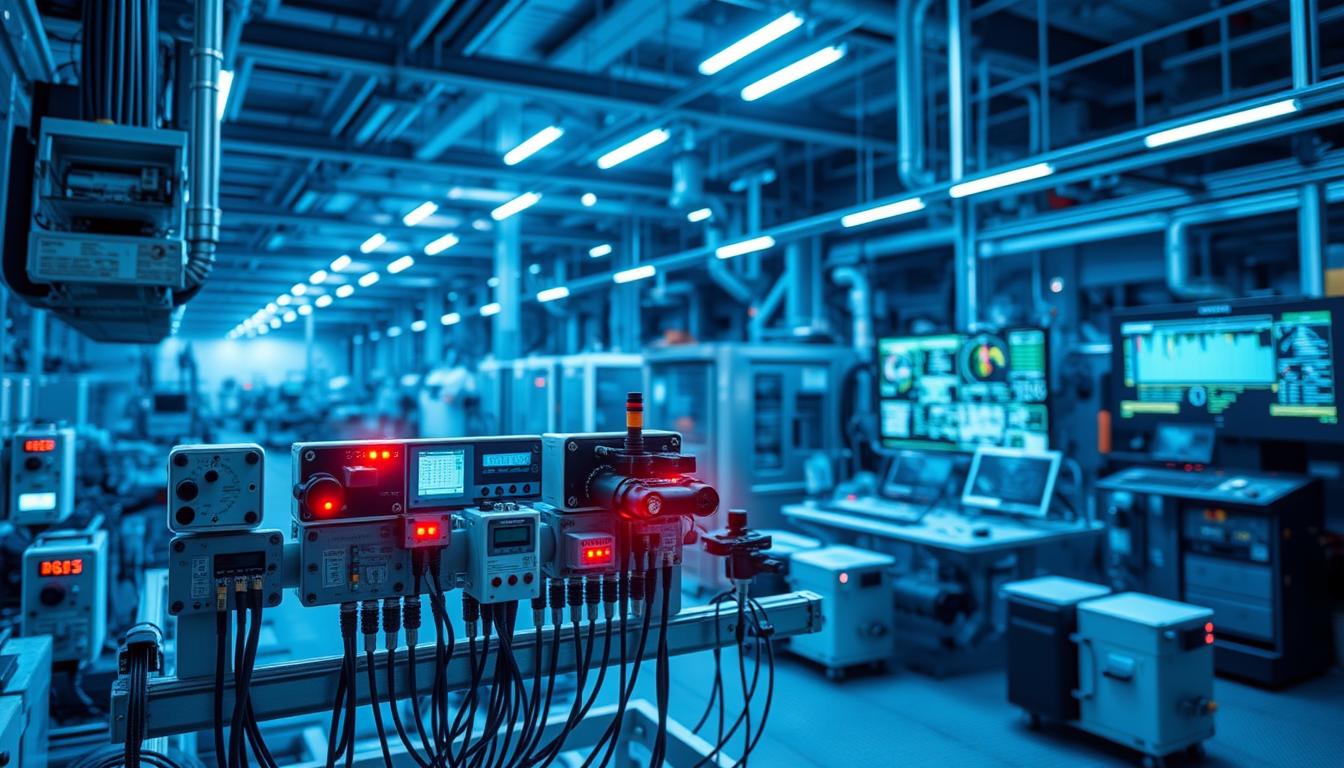
The Industrial Internet of Things (IIoT) is radically transforming industrial automation. It is based on a network of connected sensors, constantly monitoring essential equipment. This revolutionary innovation enables remote supervision and meticulous control of industrial infrastructure.
IIoT definition and fundamentals
IIoT is the integration of IoT technologies into industry. It promotes in-depth data collection and analysis, enriching decision-making capacity. Connected sensors are essential, enabling fault prediction and maintenance automation.
Differences between consumer and industrial IoT
Consumer IoT focuses on improving everyday life, while IIoT aims to optimize industrial processes. It promises to increase production by up to 200% and speed up product launches. IIoT establishes a link between production and management, improving industrial efficiency.
Technical architecture of an IIoT system
An IIoT system relies on advanced connectivity technologies such as LoRa, GNSS, Wi-Fi and Bluetooth. This infrastructure ensures continuous automation and monitoring of critical equipment. Modular solutions make IIoT accessible to small and medium-sized businesses, with a return on investment in less than 6 months.
The IIoT market is growing at an annual rate of 22%, with investment forecast to reach $949 billion by 2025. This technology promises to add $14,200 billion to the global economy by 2030. It underlines its strategic importance for 67% of manufacturers.
Industrial IoT solutions at the heart of digital transformation
Digital transformation is revolutionizing the manufacturing industry. Industrial IoT solutions are essential in this evolution towards the smart factory. They optimize production, cut costs and improve product quality.
The integration of connected sensors and cyber-physical systems is transforming production processes. These technologies collect and analyze data in real time. As a result, companies can quickly detect anomalies and make informed decisions.
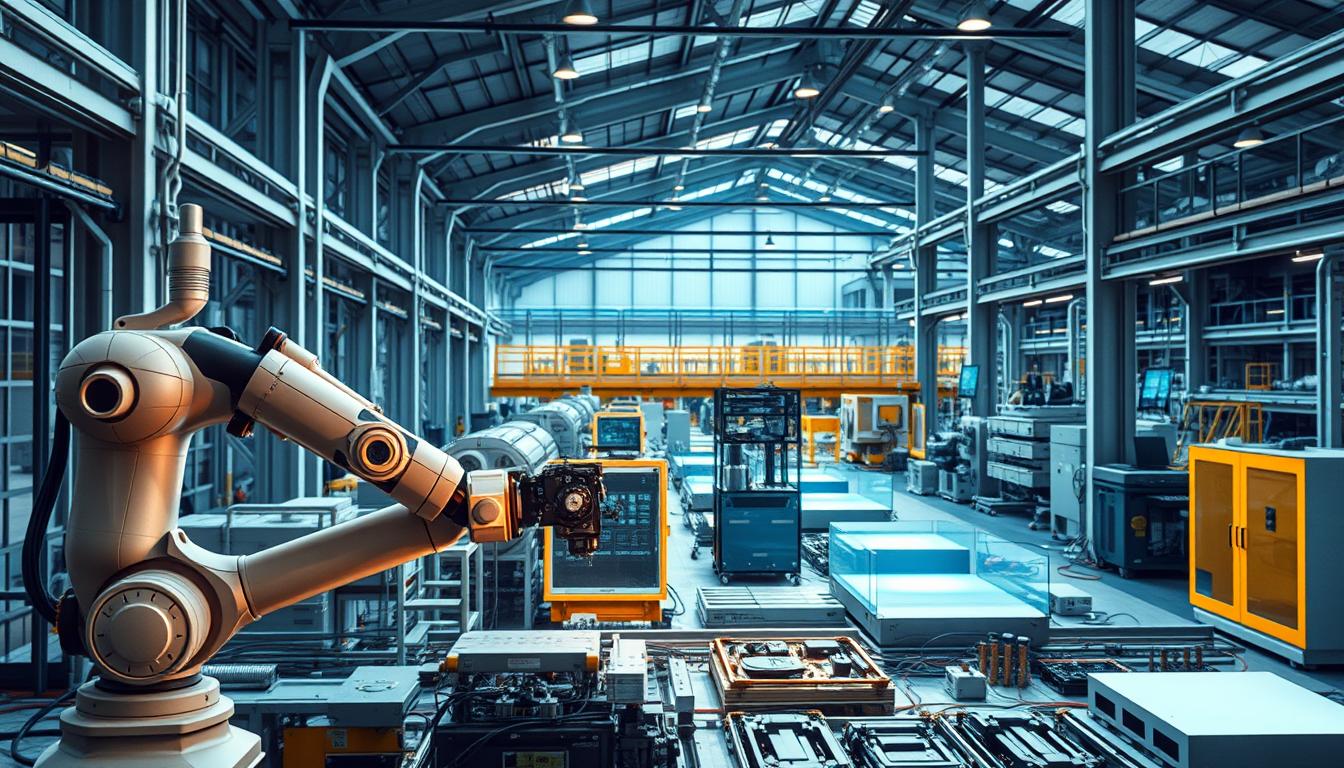
Les PC industriels et systèmes embarqués de Eukleed sont au centre de cette transformation. Ils traitent les données des capteurs et pilotent les équipements de manière intelligente. Ces solutions robustes s'intègrent aux infrastructures existantes, créant des usines connectées et performantes.
The economic impact is significant. According to McKinsey, IoT applications could generate up to $3.7 trillion a year by 2025. Predictive maintenance reduces breakdowns by 70% and costs by 25%. Energy optimization can save up to 40% on certain machines.
Digital transformation raises technical and organizational challenges. System interoperability, data security and team training are crucial. However, the benefits in terms of productivity and innovation make the smart factory an essential investment for staying competitive.
Key technologies and components
Industrial IoT solutions are based on advanced technologies. These innovations enable companies to collect, transmit and analyze data in real time. They aim to optimize operations.
Sensors and connected devices
Sensors are essential in IoT systems. They measure parameters such as temperature, humidity and pressure. Accelerometers and proximity sensors play a crucial role. These devices transmit continuous information on the status of industrial equipment.
Industrial communication networks
Industrial networks guarantee reliable data transmission. Several technologies are used, depending on requirements: Wi-Fi, Bluetooth, ZigBee or LoRaWAN. Cellular networks offer extended connectivity. The choice depends on the required range and energy consumption.
Data management platforms
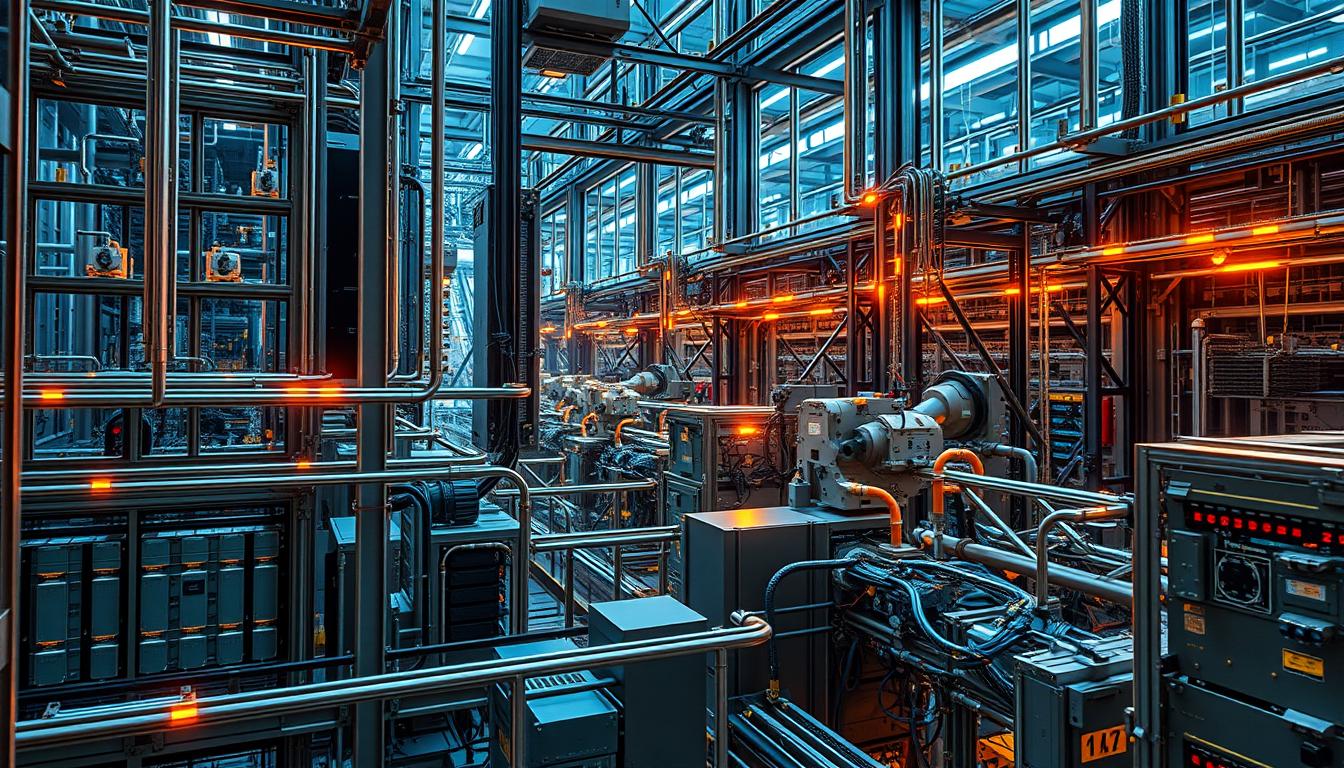
Data is stored and analyzed via dedicated platforms. Storage can be local or in the cloud. Databases like MongoDB handle unstructured data. InfluxDB is adapted to time series. These tools enable information to be visualized and embedded systems to be controlled remotely.
Les systèmes embarqués et réseaux industriels de Eukleed s'intègrent parfaitement dans cet écosystème IoT. Ils offrent la robustesse et la fiabilité indispensables aux environnements industriels exigeants.
Predictive maintenance and equipment optimization
Predictive maintenance is transforming industrial equipment management. It uses real-time data analysis to predict breakdowns and optimize interventions. This innovative approach is fundamental to the efficiency and profitability of operations.
The installation of sensors at critical points on machines enables temperature, vibration and pressure to be monitored. These devices collect valuable information on equipment status. The data is then transmitted via secure IoT gateways using the OPC-UA protocol.
Analysis of historical and real-time data is at the heart of predictive maintenance. Artificial intelligence algorithms process this information to detect anomalies and predict failures. The results are presented on intuitive dashboards, enabling teams to intervene at the right moment.
The benefits of predictive maintenance are numerous:
- Reduce unplanned downtime
- Optimizing maintenance costs
- Extending equipment service life
- Improving employee safety
- Contributing to environmental sustainability
La mise en place d'un système de maintenance prédictive nécessite une expertise technique. Eukleed propose un accompagnement complet, de l'intégration des capteurs à la formation des équipes, pour tirer pleinement parti de cette technologie innovante.
Intelligent production and inventory management
The smart factory is revolutionizing production management, thanks to industrial automation. IoT solutions are introducing real-time tracking, inventory optimization and more efficient decision-making. These advances are radically transforming industrial processes.
Real-time monitoring
IoT sensors ensure continuous monitoring of production. They detect faults and provide early warnings, helping to improve quality. At Carrefour, IoT monitors the cold chain, reducing losses by 20%.
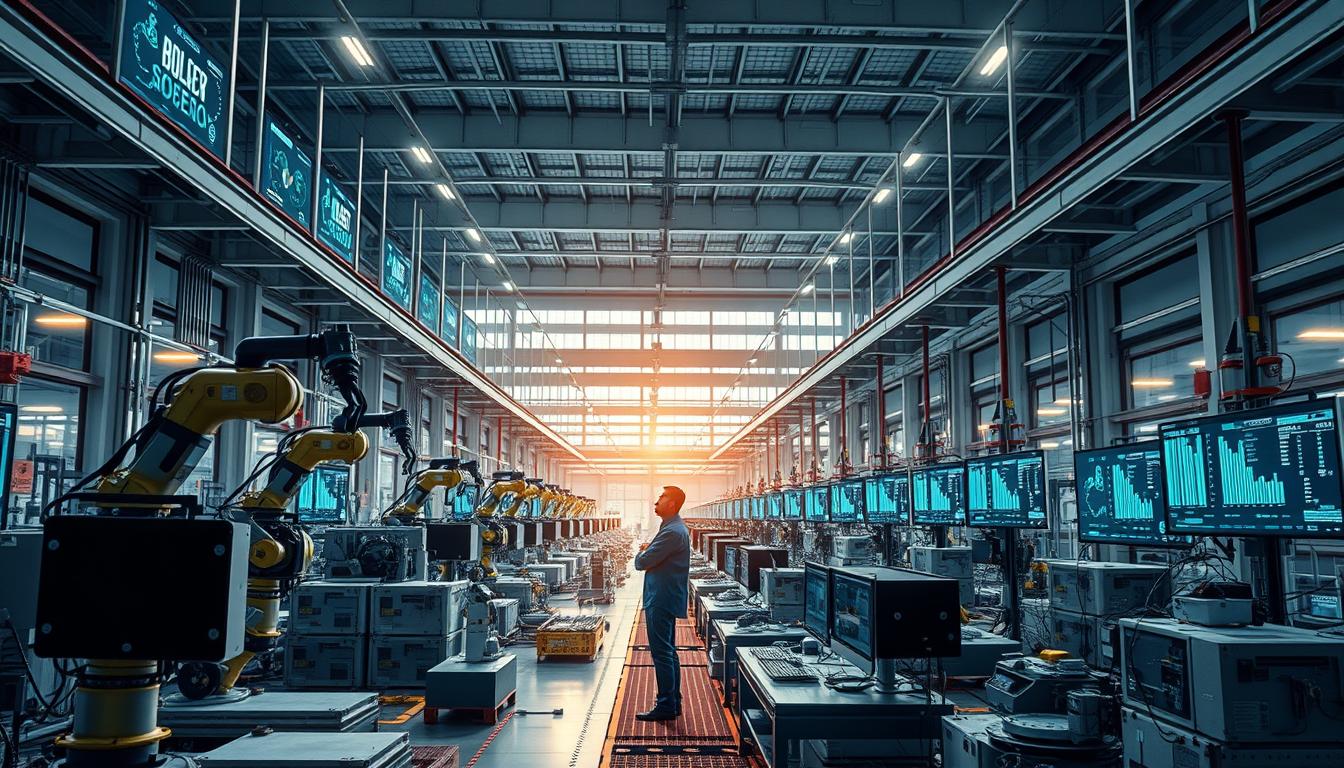
Supply chain optimization
Industrial IoT revolutionizes inventory management. RFID sensors and cameras ensure precise tracking. Amazon uses IoT to optimize its deliveries, reducing operating costs by 30%. Automatic ordering prevents stock-outs.
Automating decision-making processes
L'intelligence artificielle analyse les données IoT pour une maintenance prédictive. ThyssenKrupp l'utilise pour réduire les pannes de 20%. La planification de production s'optimise grâce au machine learning. Eukleed propose des écrans OLED et e-paper pour visualiser ces informations critiques.
Industrial IoT improves productivity by an average of 25%. It reduces costs and optimizes quality, making factories smarter and more competitive.
Safety and reliability of industrial IoT systems
Industrial network security is crucial in the age of the Internet of Things. Cyber threats are on the increase, threatening the integrity of connected systems. Denial of service attacks, malware injection and physical intrusions represent major risks for businesses.
In the face of these dangers, preventive measures are essential. Data encryption, secure port management and the adoption of industry-standard protocols are fundamental. Two-factor authentication and strong passwords enhance access security.
IEC 62443, specifically designed for industrial automation systems, provides a robust safety framework. Its certification ensures a high level of protection. The integration of secure integrated circuits in IoT devices improves their resistance to attack.
ANSSI-certified solutions for remote access and the installation of an IT bastion are essential. These measures are vital to guarantee business continuity and protect data integrity in Industry 4.0.
Impact on productivity and ROI
Digital transformation, driven by industrial IoT, is radically transforming companies' productivity and return on investment. Thanks to real-time data analysis, processes are optimized and decisions are better informed.
Measurable performance gains
Process automation reduces errors and speeds up production. ERP tools, such as Open-Prod, centralize operational data, providing a global view of performance. Real-time monitoring via IoT sensors quickly identifies inefficiencies, improving resource management.
Lower operating costs
Digitization of the supply chain minimizes inventories and reduces delivery times. Predictive maintenance, estimated by McKinsey to save 630 billion by 2025, prevents costly breakdowns. Siemens anticipates equipment problems six months in advance, considerably reducing downtime.
Improving product quality
Precise control of manufacturing processes, made possible by industrial IoT, improves product quality. PSA uses the "Track & Trace" solution to reduce production disruptions. This tailor-made approach optimizes ROI by adapting technologies to the specific needs of each company.
Integration solutions and customized services
L'intégration des solutions IoT industrielles dans un environnement existant présente des défis considérables. Des entreprises comme Eukleed offrent des services personnalisés pour surmonter ces obstacles. Ils fournissent l'assemblage de PC industriels, la personnalisation des solutions d'affichage et des batteries, et le sourcing de composants spécifiques.
The IoT professional services market is booming, reaching 56 billion euros in 2024. It is expected to reach 125 billion euros by 2030. This increase is mainly due to the growing demand for customized solutions, which accounted for around 50% of IoT projects in 2023.
Embedded systems are essential to these customized solutions. They enable real-time tracking of products, monitoring of environmental conditions, and optimization of fleet and inventory management. Integrating these systems with existing infrastructures offers valuable insights for improving industrial processes.
Collaborations between experts, such as those between KROHNE, Phoenix Contact and Software AG, underline the importance of a multidisciplinary approach. This synergy enables the development of scalable, secure OT-IT solutions. They integrate protocols such as OPC UA and HART for reliable data transmission.
These customized services meet the specific needs of each industry. They guarantee successful adoption and optimal use of industrial IoT technologies.
Conclusion
Digital transformation has become crucial in Industry 4.0. Industrial IoT solutions play a key role in maintaining competitiveness. The industrial IoT market is expanding, with an estimated $1,693 billion by 2030. These technologies are profoundly revolutionizing production processes.
Adopting these technologies offers significant benefits. Predictive maintenance, for example, can cut maintenance costs by 40%. It also saves 1.6 million hours of downtime per year. Remote monitoring improves operational efficiency. In addition, the safety and reliability of industrial processes are enhanced.
Eukleed se présente comme un partenaire essentiel pour votre entreprise. Avec son expertise en solutions IoT industrielles personnalisées, Eukleed vous guide dans l'utilisation des technologies avancées. Les capteurs sans fil, les modules radio Digi XBee et Digi Remote Manager sont quelques-unes de ces technologies. Pour découvrir comment l'IoT industriel peut propulser votre entreprise vers l'avenir, contactez Eukleed.
FAQ
What is the Industrial Internet of Things (IIoT)?
IIoT is the integration of the Internet of Things into industry. It connects machines, sensors and systems to improve production. This optimizes processes and facilitates real-time decision-making.
What are the main differences between consumer and industrial IoT?
The industrial IoT demands greater reliability and security. It must adapt to complex industrial environments. It integrates into existing, often complex, systems.
How does the IIoT contribute to the digital transformation of businesses?
IIoT creates intelligent factories. These plants optimize their processes in real time. Advanced automation and massive data analysis are facilitated, enabling faster decision-making.
What are the essential components of an industrial IoT system?
Key components include connected sensors and secure communication networks. Embedded systems and data management platforms are also essential.
How can industrial IoT improve equipment maintenance?
Industrial IoT uses predictive maintenance. It analyzes data to anticipate breakdowns. This reduces downtime and extends machine life.
What benefits does the industrial IoT bring to production and inventory management?
Industrial IoT monitors production in real time. It optimizes the supply chain and automates decisions. This improves inventory management and production.
How do you ensure the security of industrial IoT systems?
Security relies on data encryption and strong authentication. Regular updates and best practices in cybersecurity are crucial.
What impact does industrial IoT have on return on investment (ROI)?
Industrial IoT increases productivity by 25%. It reduces operating costs and improves product quality. This contributes to a better ROI.
Why are customized integration solutions important in industrial IoT?
Customized solutions meet specific needs. They overcome integration challenges in complex industrial environments.
Quel rôle joue Eukleed dans le domaine de l'IoT industriel ?
Eukleed, avec 30 ans d'expérience, est un leader dans l'IoT industriel. L'entreprise offre des solutions de connectivité et des services sur mesure pour la transformation numérique des industriels.